Why granite suits Indian kitchens
Dense, dark granites are generally the best choice for an Indian kitchen counter, and granite as a whole stays the most popular countertop stone in the country. An Indian kitchen asks a lot of a worktop: hot pans, oil, turmeric, tamarind and lemon, and daily scrubbing would mark a soft stone quickly.
Granite is hard, heat tolerant and not etched by food acids the way marble is. It still benefits from sensible habits, such as wiping oil and turmeric promptly and using a trivet under very hot vessels, especially near cut-outs and joints. Our granite for kitchen page collects the stones most often chosen.
Colour matters, but so does how you cook. Heavy tadka, deep frying and daily gravies reward a darker, more forgiving surface, while a mostly light kitchen with occasional cooking can carry a paler stone comfortably.
Darker granites hide the most
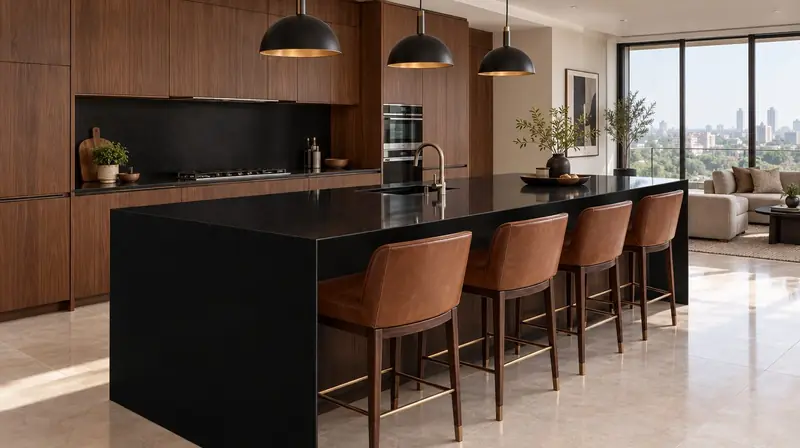
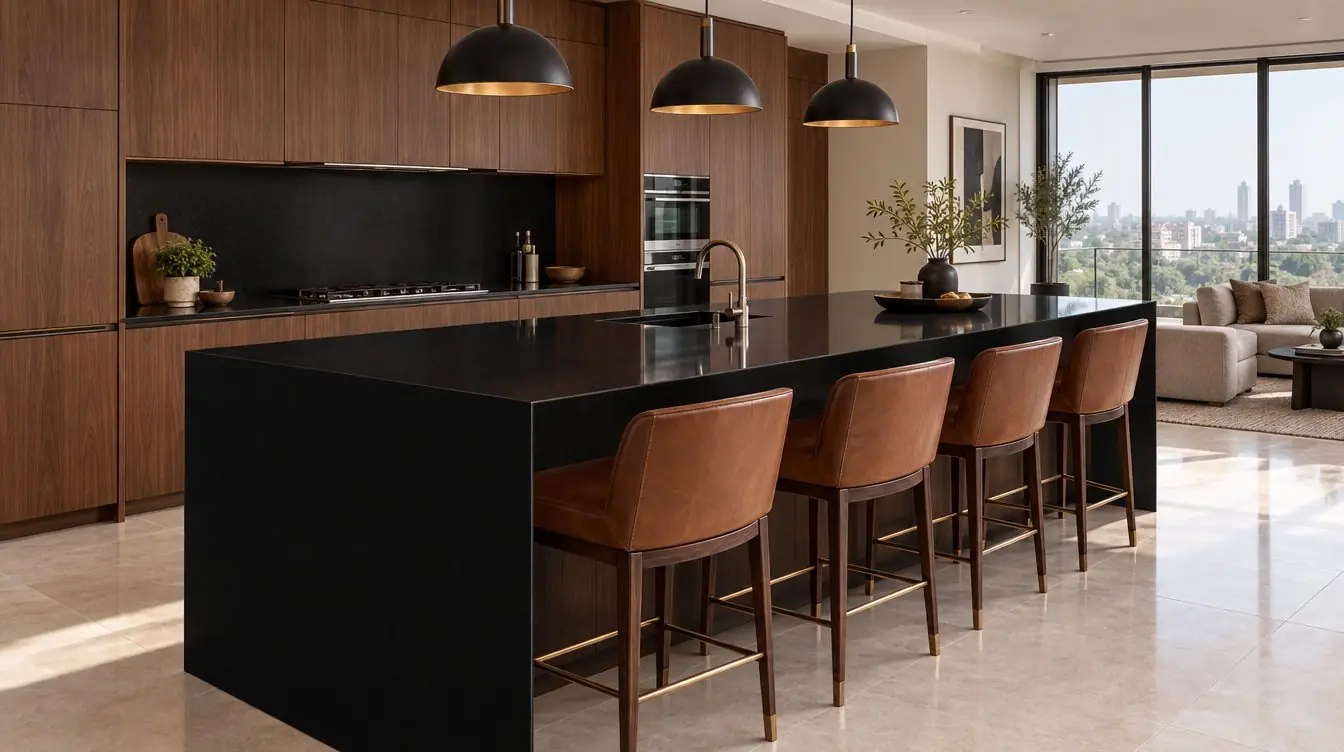
Black and dark granites are the easiest to live with. Telephone Black, Black Pearl and Bagera Black from the Chimakurthy region of Andhra Pradesh are dense and generally low in absorption. Brown granites such as Tan Brown from Karimnagar in Telangana are equally practical and hide crumbs and splashes well.
If you want the deepest look, browse all of our black granite. Remember that very dark, glossy surfaces show water spots and dust, so a leathered or lightly textured finish may suit a busy household better.
Lighter granites for brighter kitchens
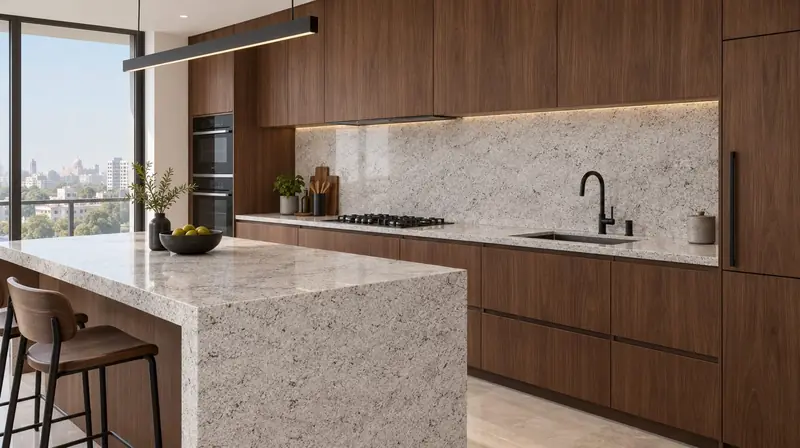
If you want a lighter kitchen, granites like Kashmir White, Alaska White and Crystal Ivory give a bright, airy look. Lighter stones can be more absorbent, so a good sealer and prompt wiping of oil and turmeric are worth the habit.
Turmeric in particular can leave a yellow shadow on pale stone if it sits. Most of the time it lifts with mild soap and water, but it is better not to let it dry on the surface. Our guide to sealing marble and granite explains how often to seal and what to use.
Polished or leathered
A polished finish is the easiest to clean and shows the colour at its deepest. A leathered finish has a soft texture that hides fingerprints and water marks, which many people prefer on dark granite. Honed finishes look elegant but show oil more readily.
Texture is a trade-off. Leathered stone hides marks, but its tiny grooves can hold grease, so it needs a firmer brush now and then. Ask to see the finish on the stone you like, since each granite responds differently.
Thickness and edges
Most countertops are made from 18 to 20 mm granite, often with a built-up front edge to look thicker. A 30 mm slab gives a heavier look without building up the edge. Ask for a rounded or eased edge on busy kitchens: sharp edges chip more easily.
Cut-outs for the sink and hob are the weakest points, so tell your fabricator to leave generous corner radii and good support there. The price of a countertop depends on the stone, its grade, the thickness and the amount you need; see how granite pricing in Delhi works before you compare quotes.
Choosing the slab itself
Granite varies from slab to slab, especially in lighter and more patterned stones. Seeing the slabs that will be cut for your kitchen avoids surprises. Explore the granite collection or get in touch to plan a visit. For daily care afterwards, read caring for granite countertops.
If you can, bring a photograph of your cabinets and a tile or paint sample, so the stone can be compared against them in person.