Why the same stone looks different from room to room
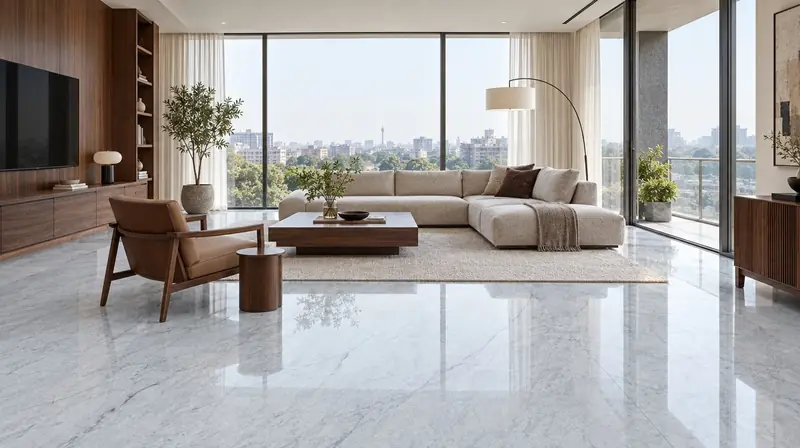
Stone changes colour with the light because it can only reflect the light that reaches it, and that light shifts through the day and from room to room. The same white marble can read cool and silver in a north-facing room and warm ivory in a sunlit one.
Three things do most of the work: the direction of your windows, the colour of your bulbs, and the surfaces around the stone. Marble is also slightly translucent, so light enters the surface a little before it bounces back, which is why it looks soft and not flat. Granite is crystalline and shows its mineral sparkle most under strong, direct light.
Morning, noon and lamp light
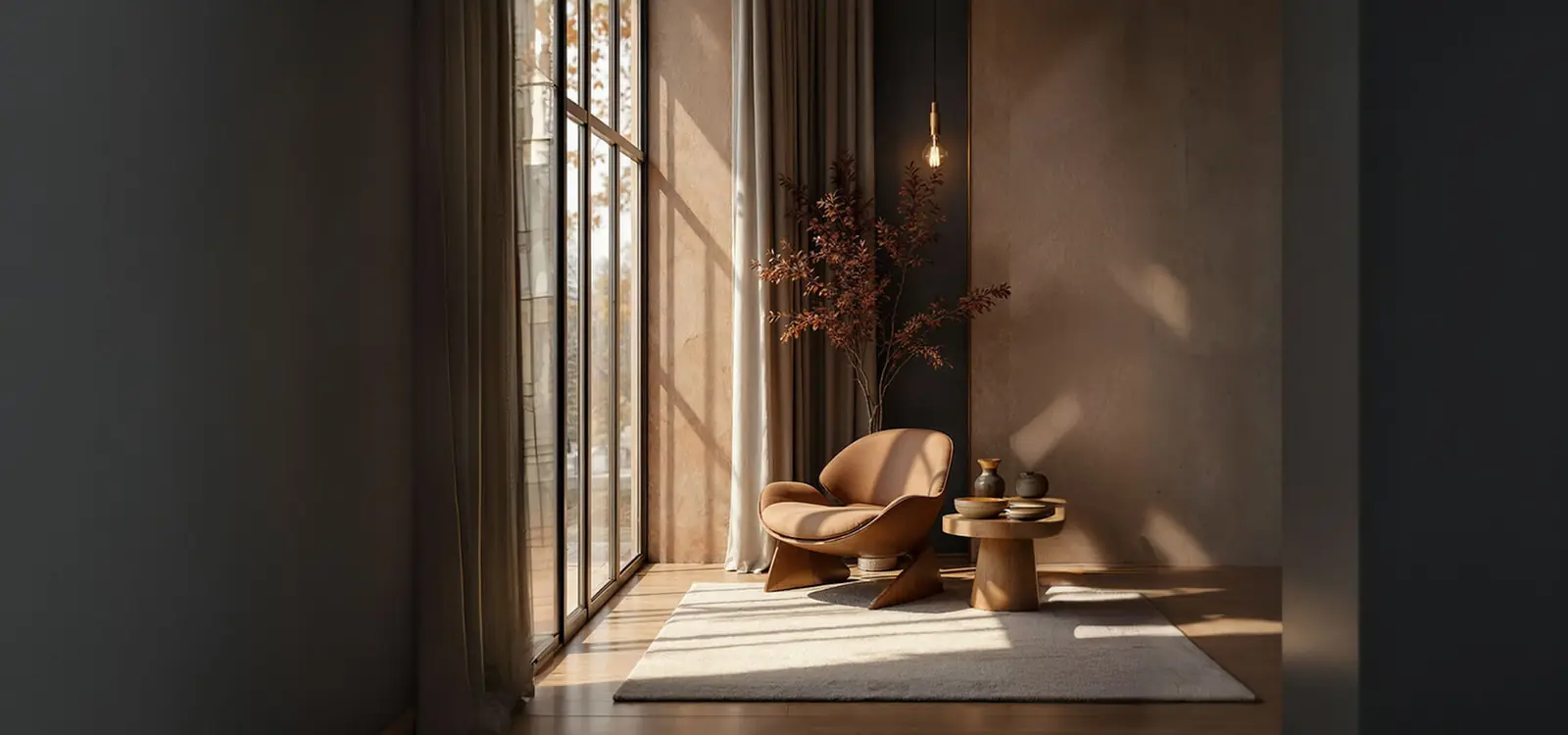
Look at your shortlisted stones at different times of day. Warm light deepens beige and brown marbles; strong daylight brings out grey veining and the sparkle in granite.
Evening lamp light is the one people forget. Many homes use warm white LEDs at night, and these push whites towards cream and can make greys look slightly brown. Cool daylight bulbs do the opposite and can make a cream marble look flat. Before you decide, find out the colour temperature of the bulbs you plan to use and, if you can, hold a sample under them.
The colour of your walls matters too. A warm cream wall will tint pale marble beside it, and a deep green or blue will make it look cooler.
Polished or honed
A polished surface reflects light and makes colours richer. A honed surface absorbs it and softens contrast. In bright rooms honed finishes reduce glare; in darker rooms polish can lift the space.
Polish also reflects the room back at you, so a window opposite a polished floor will throw a bright patch across it. Honed stone shows no such patch, though it can look a shade lighter and chalkier than the polished version of the same slab. If you are unsure, ask to see both finishes of the same stone side by side.
Rooms with strong sun, such as a west-facing living room, tend to suit honed stone, while a dim passage or a basement may be brighter with polish.
Why a small sample can mislead
A palm-sized sample tells you the base colour and little else. Veining, cloud and mineral patches only show over a full slab, and a large area of any colour tends to look stronger than a small piece of it. A pale sample that looks perfect can feel heavy once it covers a whole floor.
Stone also varies from slab to slab, more so in natural marbles than in plain granites. Seeing the actual slabs, not only a catalogue photograph, is the safest way to avoid a surprise. Our experience centre in Rajouri Garden displays full slabs, which can be reserved in your name.
A practical way to decide
Start with two or three stones. Look at the full slabs in daylight, then take photographs near the window and away from it. At home, place a sample on the floor or wall where it will be installed and look at it in the morning, at midday and under your evening lights.
Whites are the most sensitive to all of this. If you are comparing, try Carrara White, imported from Carrara in Italy, against Cream Karaman, from Karaman in Turkey, in the same spot and see how differently each one responds. For more on white stones, see our page on white marble, and read how to inspect a marble slab before you reserve one.