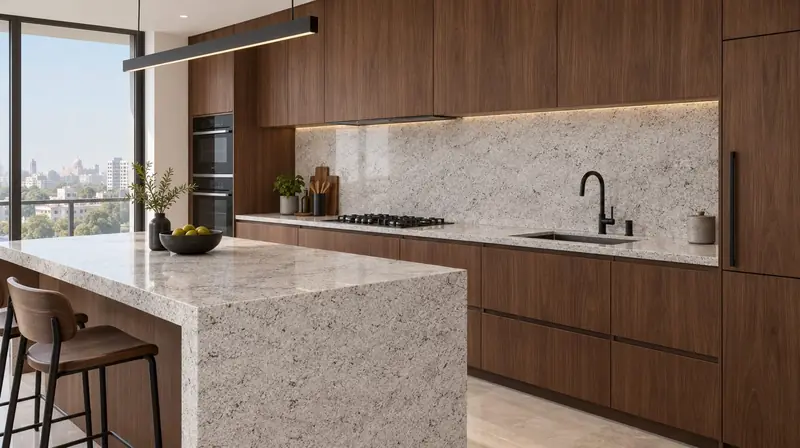
Why white marble turns yellow
White marble usually turns yellow for one of four reasons: iron-bearing minerals in the stone oxidising when they stay wet, a wax or sealer building up, dirt trapped in a worn surface, or stains from oil and tea. Knowing the cause matters, because the cure differs.
A yellow that looks like rust and spreads from within often points to moisture and iron in or under the stone. A yellow film that wipes at the edges is more likely a coating. A dull patch in a walkway is typically wear. Identify which you have before reaching for any cleaner.
Choose the right stone
Some white marbles are more stable than others. Dense whites such as Snow White, from Ambaji in Gujarat, and well-selected Italian whites like Carrara White, from Carrara in Italy, hold their colour well when installed properly.
No marble is completely immune. The most pure-looking stones with the least veining or mineral spotting are usually the best for a long-lasting white. Look at the back and edges of a slab for rust-coloured spotting. Our white marble page lists the options.
Installation matters
White marble should be laid with white adhesive and white or matching grout, and allowed to dry thoroughly. Grey cement and trapped moisture can show through or cause discolouration.
Many yellowing problems begin on the day of installation. Rushing the work or laying over a damp base can trap water under the stone. Tell your contractor that the marble is white and ask about the adhesive and the waiting time before the floor is used.
Cleaning habits
Use pH-neutral stone cleaners and avoid wax-based products, which yellow with age. Dry wet areas such as bathroom floors, and keep up regular sealing with a non-yellowing sealer.
Acidic cleaners, such as vinegar or lemon-based products, can dull the surface by etching it, which is different from a stain. Read our guide on marble stain versus etch, and the notes on cleaning and maintaining marble floors.
Bringing it back
Light yellowing from build-up can often be removed by deep cleaning and re-polishing, which is work for a stone restoration specialist. Rust-type yellowing can be harder and may not clear fully. A poultice or professional treatment is sometimes used, and results vary.
Prevention is far easier than repair. Seal correctly, as our note on sealing marble and granite explains, and wipe spills quickly. Choosing a new white? Browse the marble collection or ask for advice before you buy.
Everyday habits that help
Most of the work is in small habits. Use mats at doors to keep grit off the floor, because grit scratches the surface and gives dirt a place to settle. Wipe spills of tea, coffee, oil and juice quickly, since marble is porous and stains grow the longer they sit.
In bathrooms, squeegee or dry the floor after use, and let air circulate. In kitchens, place a board or tray under bottles of oil or lemon-based cleaners. Light, regular care keeps white marble looking clean far longer than occasional heavy cleaning.
When to call a specialist
If you are unsure of the cause, test a small hidden patch before treating a large area. A specialist can often tell by eye whether you have a coating, a stain or an etch. Be wary of strong chemicals, which can make things worse and are hard to reverse once they have soaked in.