Which is better for a home?
Real marble gives depth, uniqueness and the ability to be restored, while vitrified tiles give lower maintenance and a more predictable result. Neither is wrong, and the better choice depends on the room, your tolerance for upkeep and how long you plan to live there.
Modern vitrified and porcelain tiles can print a convincing marble pattern and are widely used in India, so the question is a fair one.
| Marble | Vitrified tiles | |
|---|---|---|
| Made by | Nature, quarried as slabs | Factory, fired at high temperature |
| Pattern | Unique in every slab | Repeats across tiles |
| Stain resistance | Porous, needs sealing | Very low absorption |
| Joints | Few with large slabs | Visible, depends on tile size |
| If it dulls | Can be polished again | Surface usually cannot be restored |
Look and depth
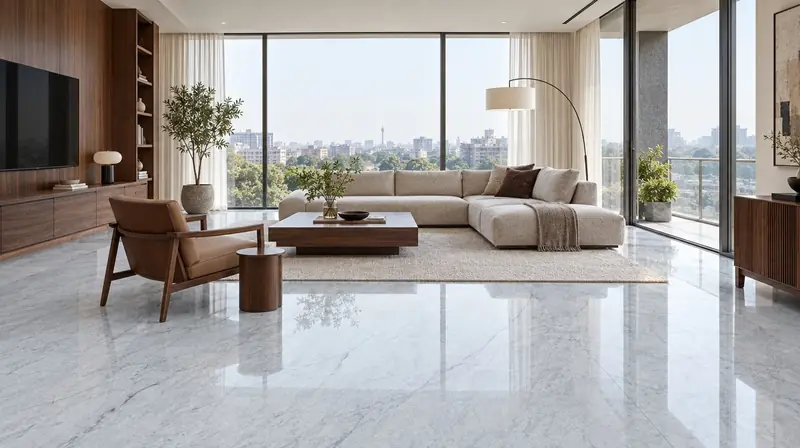
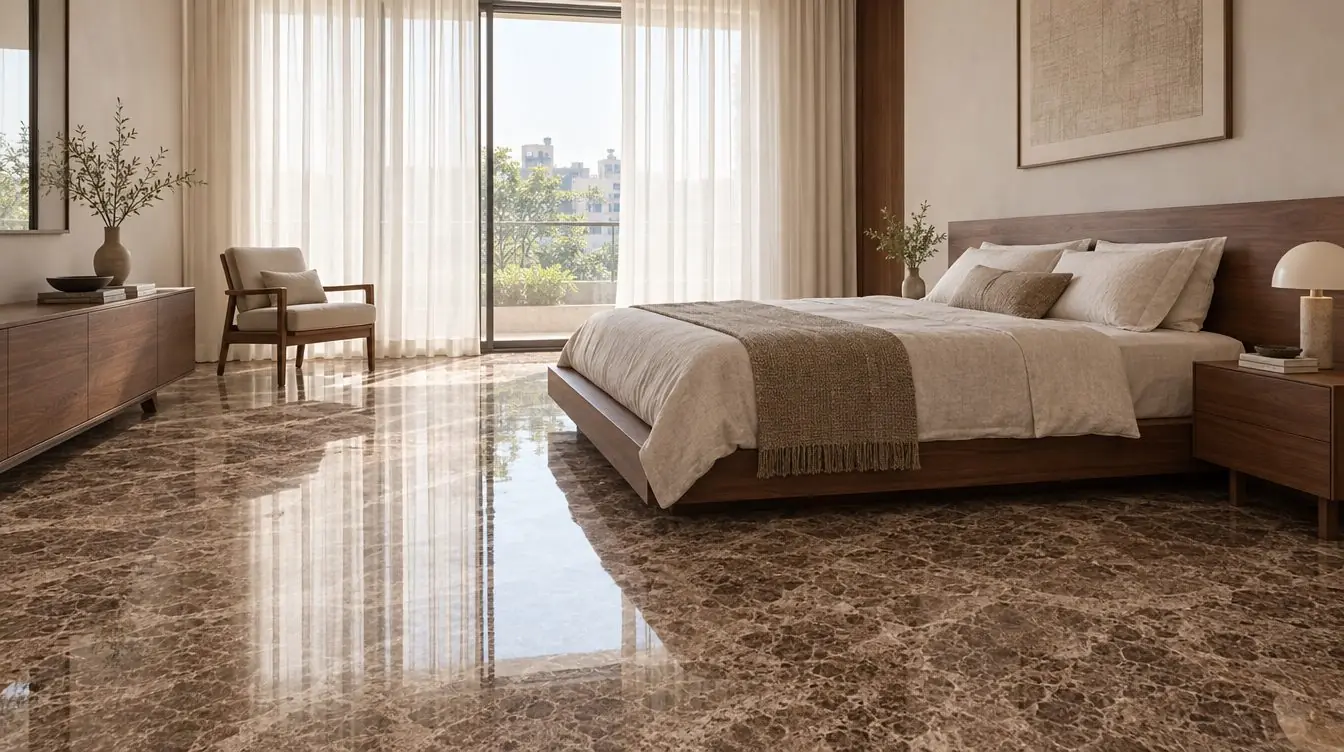
A printed tile repeats its pattern, and the image sits on the surface. Natural stone has depth: veins run through it and light plays across the crystals. Every slab is unique, so no two floors look alike. On a large floor, repeated tile patterns can become noticeable, which is hard to see from a catalogue but easy to see in a room.
A well-chosen slab also shows its natural variation with pride. A little shade difference is part of the character of stone and not a defect, and it is worth deciding early whether you are comfortable with that.
Durability and repair
Vitrified tiles are hard and low maintenance, but a chipped or cracked tile usually has to be replaced, and a matching batch may be difficult to find later. Natural stone can be honed, polished and restored many times over its life, which is why old stone floors still look good. Marble is softer, so it scratches more readily than tile, which is a trade-off worth admitting.
Care and everyday living
Tiles need little more than regular cleaning. Marble needs sealing, prompt attention to spills and care with acidic cleaners. Granite sits in between: it is tough and needs only occasional sealing. If a very low-effort floor matters most, a tile may suit you better. If you enjoy the character of natural material and accept some patina, stone rewards it. See our note on letting marble patina.
Value over time
Natural stone floors are often seen as a mark of quality and can add to a home's appeal. They age gracefully rather than going out of fashion, and a worn floor can be refreshed rather than torn out. This is a general view, not a promise of resale value, which depends on the market and the property.
Cost and installation differences
Cost per square foot differs widely, and stone also involves more handling, laying skill and sealing. Vitrified tiles are factory-made in standard sizes, so laying is quick and predictable. Stone slabs vary in size and need more skill to level and join. That is one reason the contractor you choose matters so much with stone. Try to compare the installed cost of each option for your floor plan, rather than the material price alone.
Tiles can be a practical choice for service areas, rental properties or tight budgets. Many homes combine both: stone in the living and dining areas, tile in utility spaces. Price for both depends heavily on the specific product, so compare like with like, and ask for a quotation on the actual stone rather than relying on averages.
Decide in person
Compare a real slab with a tile side by side and the difference is clear. Explore marble flooring and the wider marble collection, then see slabs at our experience centre. If you are weighing granite for rougher areas, our granite collection is worth a look too.