Is granite good for driveways and parking?
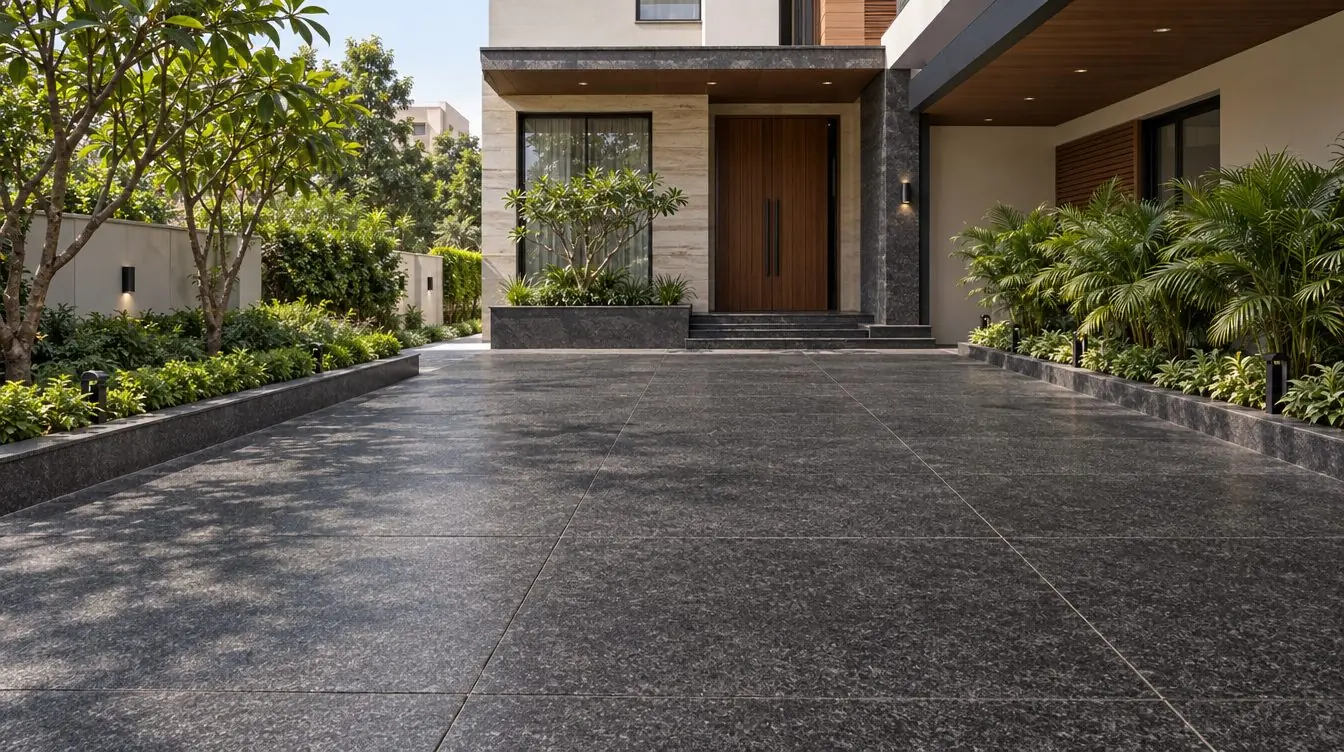
Yes. Granite's hardness and low absorption make it the most reliable natural stone for driveways, porches and the stilt parking found under so many Delhi NCR homes, provided you choose a textured finish and lay it on a proper base.
Outdoor floors in India face heavy vehicles, oil drips, monsoon rain and fierce sun. Few materials cope with all four as steadily as Indian granite.
Granite is also a stone you can find in colours that suit most facades. Black, grey, brown, pink and blue are all quarried in India, so the driveway can be matched with the house instead of being an afterthought.
Choose a textured finish
Polished granite is slippery when wet and should not be used where cars and people move outdoors. A flamed finish is the standard: it gives excellent grip and hides tyre marks. Lappato and sandblasted finishes are alternatives.
Flaming roughens the surface with heat and slightly lightens the colour, so look at a flamed sample rather than a polished one before you decide. This guide compares the finishes in detail.
Cut pieces can be laid in sizes from small setts to larger slabs. Smaller pieces tolerate movement and uneven ground better, while larger ones give a cleaner, more modern look and need a flatter base.
Thickness and base
Driveways and parking areas usually need thicker stone than interior floors, laid on a well-prepared, compacted base to carry vehicle loads. Thickness depends on the stone, the size of the pieces and the expected traffic, so ask your contractor to confirm it.
Indoors, granite is commonly cut thinner. See the thickness guide for how choices differ by use.
Where the driveway slopes or turns, a rougher finish helps tyres grip in the rain. Ask your contractor about any ramp in the stilt area as well, since that is where cars struggle most on a wet surface.
Colours that work
Mid-tone and darker granites hide dust, oil and tyre marks best. Tan Brown, SK Blue and Steel Grey are practical choices, and pink and red granites from Jalore in Rajasthan such as Rosy Pink add warmth.
Very pale granites show oil and rubber quickly, and very dark ones can look dusty under Delhi's summer haze. Mid-tones are the easiest to live with.
If you are unsure of a colour, ask to see a wet sample as well as a dry one. Rain darkens most granites noticeably, and the wet look is what you will see for several months of the year.
Drainage and care
Make sure the surface falls gently towards drains so water does not stand. Clean oil spots promptly and pressure-wash periodically.
Joints deserve attention too. Leave proper spacing for movement and use suitable jointing material so that weeds and water do not find their way in. Your stone contractor will know what suits local conditions.
Algae can grow in shaded, damp areas during the monsoon, and a brush with plain water or a mild cleaner usually removes it. Avoid strong acids, which can discolour even granite.
Where to start
Fix the finish, thickness and base first, and the colour second. Then see outdoor-ready stones in the granite collection, or write to us with your area and we will help you shortlist.
The price depends on the stone, thickness, finish and size of the area, so a quotation follows once these are known.