Why thickness matters
For most homes, marble floors are commonly laid at 16 to 18 mm, and granite countertops at 18 to 20 mm, with 30 mm available for a heavier look. Thickness affects strength, weight, appearance and cost. Too thin and a slab may crack under load; too thick and you pay for stone you do not need.
These are common trade practices, not fixed rules, and they vary by stone, supplier and region. Always confirm the thickness for your own project with your architect or stone contractor.
Floors
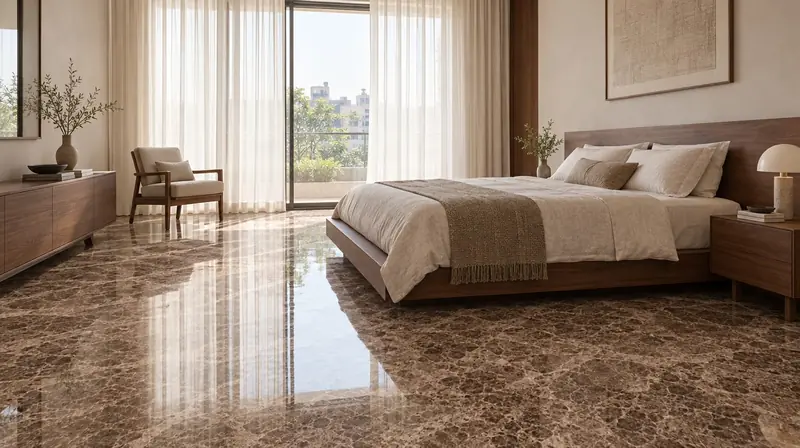
Interior floors are commonly laid in 16 to 18 mm marble or granite on a well-prepared bed. Very large formats and areas with heavier loads benefit from thicker stone.
The bed matters as much as the stone. An uneven base or hollow spots under the stone are a leading cause of cracks. Read about marble flooring and how the work is usually planned.
Walls and cladding
Interior wall cladding often uses thinner stone because it carries no load. Exterior cladding needs appropriate thickness and proper mechanical fixings rather than adhesive alone.
Weight is the main concern on walls. Heavier stone needs stronger fixing, and tall walls put more demand on the fixings. Your contractor should confirm the method for the specific stone and height.
Thicker stone is heavier, and weight matters in practice. Heavy slabs need more people and proper equipment to move, and on upper floors the added load should be reviewed with your structural engineer. This is another reason not to choose a thicker slab just because it feels more solid.
If you are unsure, ask your fabricator to explain why a particular thickness is being suggested. The answer should relate to the span, the support and the way the stone will be used.
Countertops
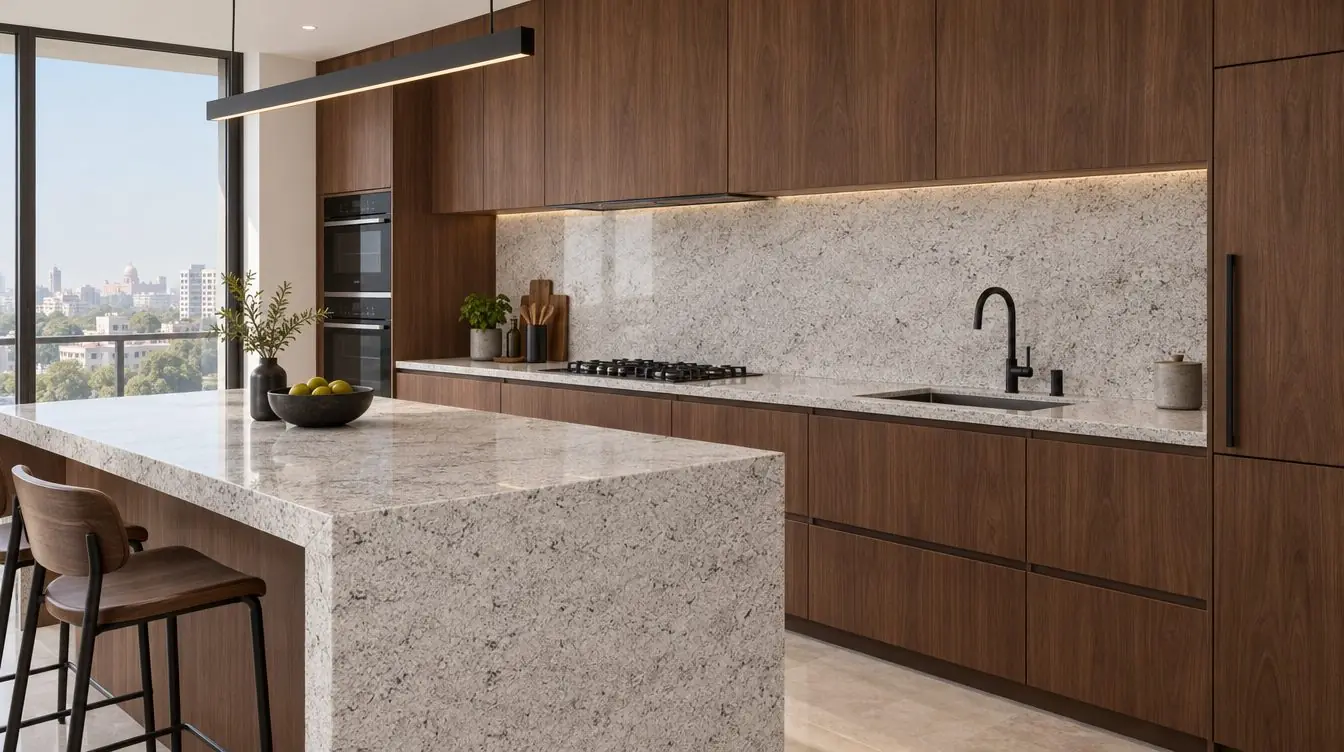
Kitchen countertops are usually 18 to 20 mm granite, often with a thicker front edge built up from a second strip. 30 mm slabs give a solid, chunky edge without building up.
Spans and overhangs also affect what is needed. A long unsupported stretch, such as a breakfast bar, needs a thicker slab or proper support underneath. Telephone Black and Black Pearl, both from Chimakurthy in Andhra Pradesh, are widely chosen for counters. See also granite for kitchen.
Outdoor and parking
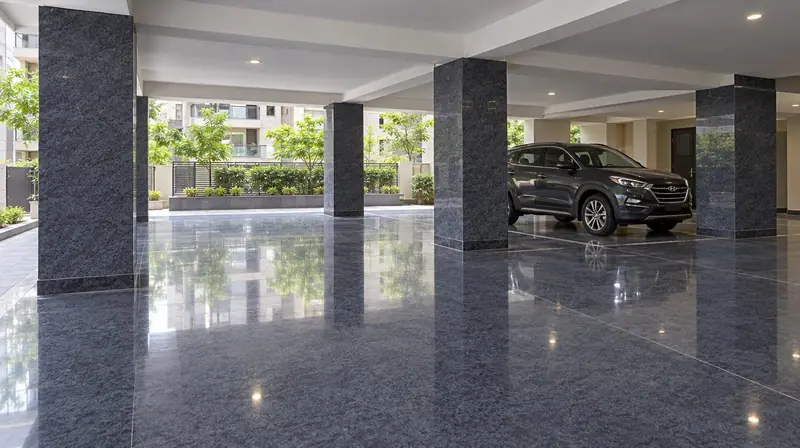
Driveways and parking areas need thicker stone on a compacted base to carry vehicles. The base and drainage are just as important as the thickness, and your contractor should design them for the expected loads. See granite for driveways and stilt parking for more.
How thickness affects cost
Stone is usually priced by area for a given thickness, so a thicker slab generally costs more, because it contains more stone and is heavier to move and handle. Moving from a thinner to a thicker option is therefore a real cost decision, not a minor one.
Other factors include the stone itself, its grade, and how much you need. For a broad idea of how these factors work, see marble prices in Delhi, and use how much marble you need to estimate the quantity.
Ask before you buy
The right thickness depends on the stone, the use and the base. Tell us where the stone is going when you get in touch. Thinner slabs are also covered in our comparison of marble slabs and tiles.