Why stairs are different
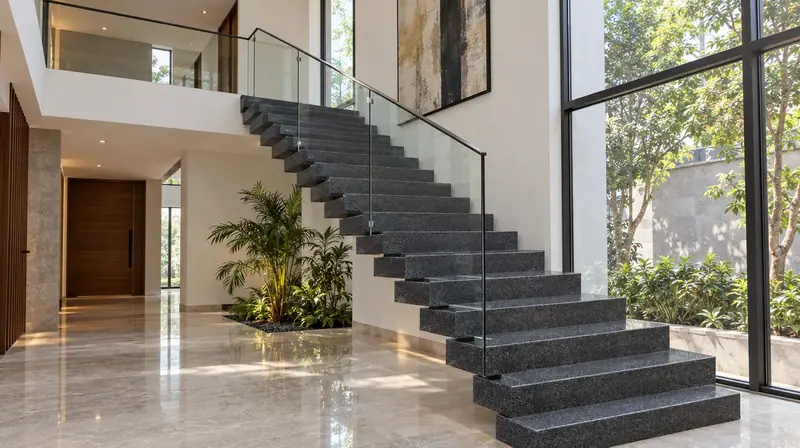
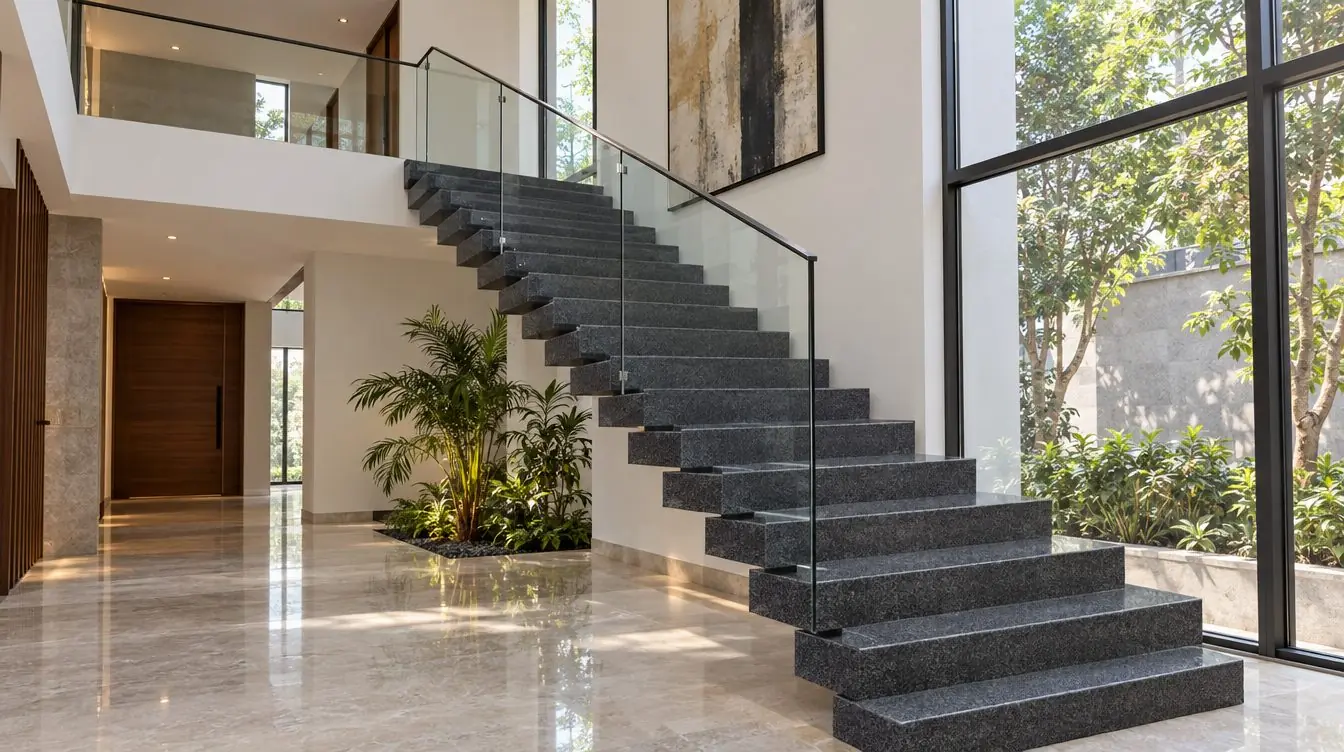
Granite is usually the safest, longest-lasting stone for a staircase, and a honed or flamed finish gives better grip than polish. Every step concentrates foot traffic on the front edge, and a slip on a stair is more serious than one on a flat floor, so stone for staircases needs to be both hard wearing and safe.
Stairs also take knocks from furniture, bags and shoes, and the front edge of each tread is the first place to chip. The choice of stone, finish and edge detail matters more here than almost anywhere else in the house.
Granite for high traffic
Granite is the most durable choice for staircases, particularly in apartment buildings, offices and exterior steps. Steel Grey, from Ongole in Andhra Pradesh, Tan Brown, from Karimnagar in Telangana, and Kashmir White are long-standing favourites.
Shared stairways in housing societies and commercial buildings see the heaviest use, and a mid-tone granite hides footprints and dust better than a very light or very dark one. Browse the Indian granite range for more options.
On exterior steps, granite also copes better with rain, sun and temperature changes than most marbles do, which is why it is the usual choice for entrances and terraces.
Marble for interior stairs
Inside a home, marble staircases are elegant and comfortable underfoot. Choose harder marbles, and consider a honed finish that will not show wear as quickly.
Marble is softer than granite, so expect the tread edges to show some wear over the years. A staircase that matches your marble flooring creates a continuous look, but a granite tread with a marble riser is a common compromise when you want both beauty and durability.
Safety details
Anti-slip grooves cut near the nosing, a flamed strip or a honed finish on the tread all improve grip. For outdoor steps, a flamed or textured finish is essential. Our guide to granite finishes compares the options.
Plan for lighting and handrails too. Good light on the steps and a firm handrail do as much for safety as the stone itself. Details such as groove depth and tread dimensions are best settled with your architect and fabricator.
Contrast helps as well. A visible edge strip on each tread makes the steps easier to read in dim light, which matters for children and older people.
Nosing and thickness
Treads are commonly 18 to 30 mm thick, with the front edge rounded or built up to look heavier. A rounded nosing resists chipping better than a sharp one.
The right thickness depends on the stone, the support under each tread and how the stair is built, so ask your stone contractor. Our stone thickness guide goes through the common sizes.
Matching risers
Using the same stone for treads and risers gives a seamless look; contrasting risers can make each step more visible. A darker tread on a lighter riser is a quiet safety measure for older family members.
Explore options in the granite collection, or tell us about the staircase and we can suggest stones to look at.
Planning a staircase with your team
Stair stone is cut to a fixed number of treads and risers, so the quantity is easy to calculate once the drawings are final. Share the plan with your architect and stone contractor early, and ask them to confirm the edge profile, the tread depth and how each step will be fixed.
It helps to choose one or two spare pieces of the same lot. Matching a replacement later can be difficult, because natural stone changes slightly from batch to batch.