Which beige marble is best for flooring?
There is no single answer, because beige marbles differ in undertone, veining and price. Botticino suits those who want a classic cream, Spanish Emperador suits those who want richer browns, and Indian beiges suit large areas.
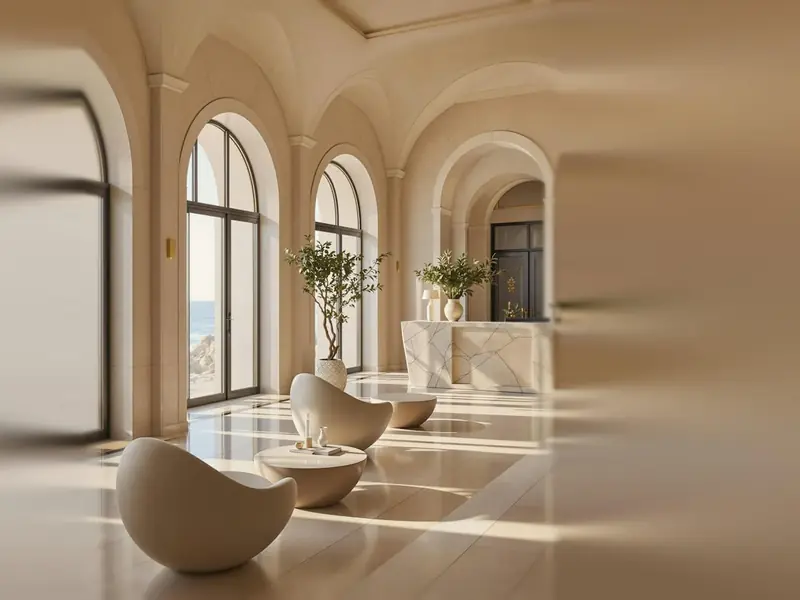
Beige and cream marbles are among the most widely used stones in the world. They feel warm, hide everyday dust and suit traditional and contemporary interiors alike. Our beige marble page shows the range.
The family is wide, so start by deciding how much pattern you want. A quiet, even beige keeps the room calm, while a stone with clouding and veining becomes a talking point. Neither is wrong, but they lead to different shortlists.
Italian creams
Botticino from Brescia in Italy, such as Botticino BRB, has a soft cream background with fine veining and spots. It is a classic for floors and bathrooms.
Several Botticino variants are available under different names, and each has its own tone. Looking at them together shows how much the shade can change.
Some Botticino varieties carry fewer spots and a more uniform ground, others show more veining. Variants such as Bottochino 20MM are listed separately, so check exactly which one a quotation refers to.
Turkish and Portuguese creams
Turkey and Portugal produce elegant creams and beiges, from Cream Karaman to Mocha Creama.
These tend to have an even, quiet look, which makes them good for living areas where you want the stone to support the furniture rather than compete with it.
Cream Karaman comes from Karaman in Turkey, and Mocha Creama from Leiria in Portugal, so you can see how a similar warm palette appears in two different countries. Compare actual slabs, because tone varies within a variety.
Spanish browns
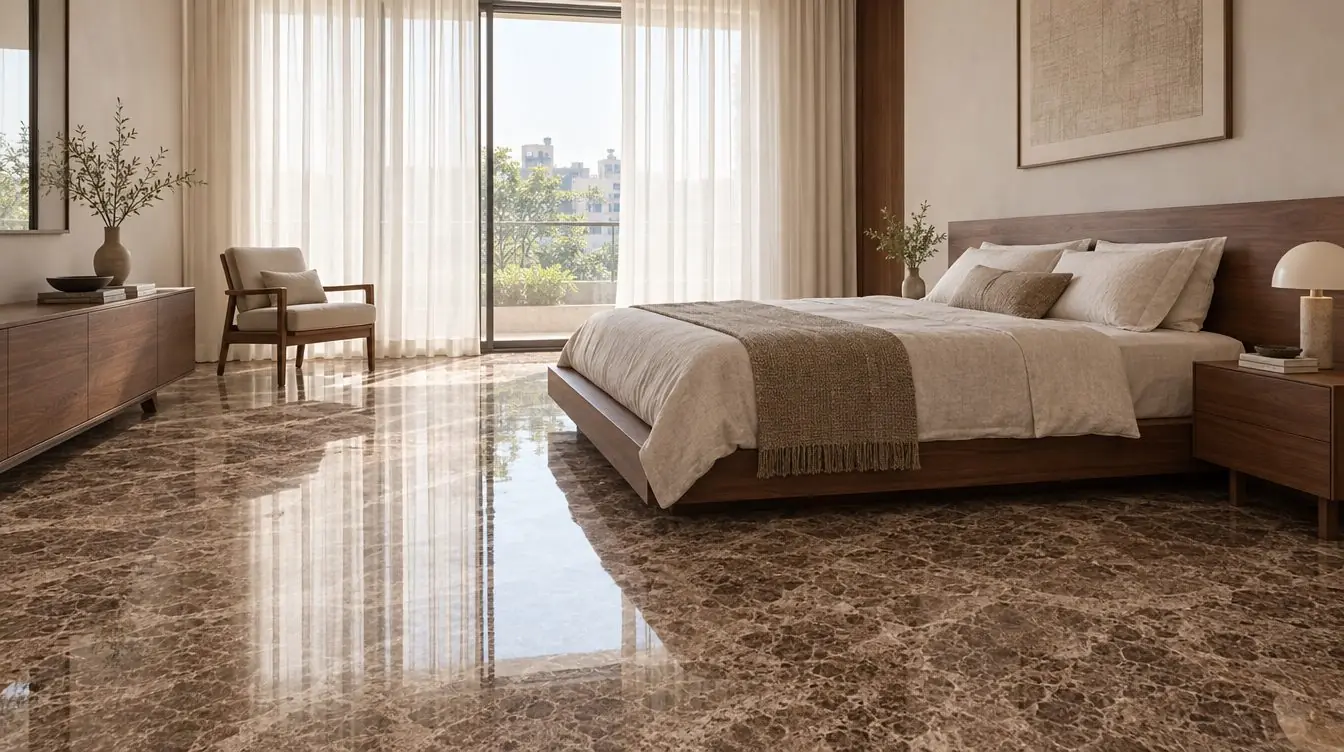
For warmer, deeper tones, Spanish marbles such as Light Emperador and Dark Emperador bring rich browns with dense veining.
They are expressive stones, so they work best where the pattern is part of the design, such as a lobby, a feature wall or a statement floor.
Spanish marbles also work well with dark wood and brass. If your room already has strong colour, a plainer cream may be the better call.
Indian beiges
Rajasthan offers many beiges, including Clova Beige and Regal Beige, often at good value for large floors.
For a home that needs plenty of floor area covered evenly, an Indian beige is often the practical starting point. The comparison of Indian and imported marble explains the trade-offs.
They are also useful in homes where the same stone must run through several rooms, because a consistent supply of similar slabs helps. Ask about the batch before you finalise the quantity.
Choosing
Compare undertones in daylight: some beiges lean pink, others yellow or grey. A beige that looks perfect in a showroom can change under your room's lighting, so hold samples against your walls and furniture.
Cost depends on origin, rarity, slab size, finish and thickness, so shortlist two or three and ask for a quotation. See them all in the marble collection or in person at the experience centre.
If you are covering a large area, think about how the tone will look when repeated across many metres. A shade that is pleasant on one slab can feel heavy over a whole floor, so a lighter option is often the safer choice for big rooms.