How do you calculate how much marble you need?
Measure the length and width of every area in feet, multiply to get square feet, add skirting and steps separately, then add an allowance for wastage. Most stone in India is sold by the square foot, so the final figure should be in square feet.
The number you get is only an estimate. Your fabricator will confirm it against the actual slabs, because cutting loss depends on layout and slab size.
Measure each area
Measure the length and width of each room or surface and multiply to get the area. A room of 12 by 14 feet is 168 square feet. Split L-shaped or irregular rooms into rectangles, work out each, and add them up.
If you have measurements in metres, one square metre is about 10.76 square feet. Measure from wall to wall, and do not subtract cupboards that will sit on top of the floor unless your fabricator advises it.
Write the measurements down room by room, with the date and the person who measured, so you can recheck if a number looks off. A tape measure and a notebook are enough, and a second pair of hands helps for long walls.
Add skirting and steps
Include skirting, thresholds, window sills and steps separately, measuring their running length and height or depth. Skirting is usually a narrow strip, so a few rooms of it adds up faster than people expect.
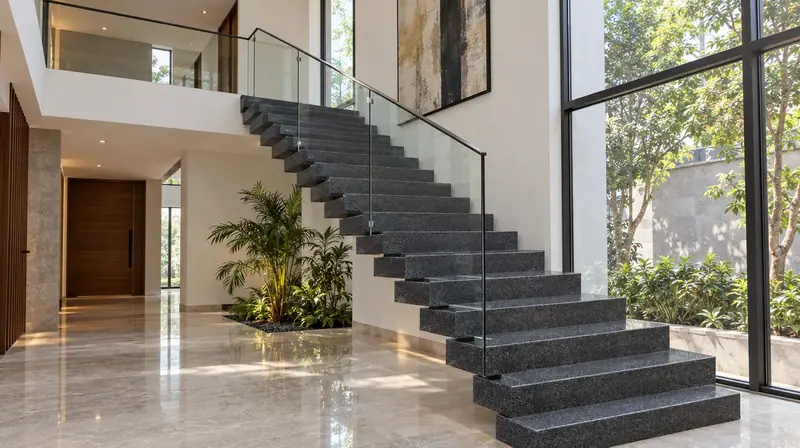
Staircases deserve their own count: each step has a tread and a riser, and the stone for them is cut from slab. Our note on stone for staircases goes into more detail.
Allow for wastage
Natural stone always involves cutting loss. Plain stones laid in simple rooms need less allowance, while patterned marbles that must be matched, rooms with many corners and diagonal layouts need more. Many fabricators allow somewhere around 5 to 10 per cent for simple jobs and more for matched or diagonal work, but practice varies, so ask yours.
In the 168 square foot room above, a 10 per cent allowance takes the order to about 185 square feet. Treat that as an illustration, not a rule.
Slab layout
With slabs, the real question is how many whole slabs are needed to cover the area with the right veining. A slab layout drawing, prepared by your fabricator, shows how pieces will be cut from each slab and avoids shortages. Slab sizes differ, so the layout can shift the number you buy up or down.
If you are choosing between large slabs and standard sizes, see our guide on marble slabs versus tiles, and check thickness in the stone thickness guide.
Buy from one lot
Buy all the stone for a project from the same lot so colour and pattern match. Running short and topping up later can lead to visible differences, because natural stone shifts in tone from one block to another.
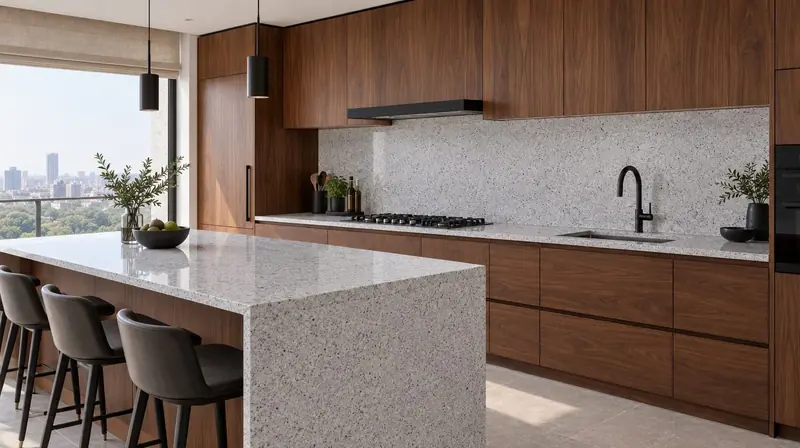
For floors, the marble flooring page is a good place to start. Counters are covered under the granite for kitchen page. When you have your numbers, share your measurements when you get in touch and the team can help you think through what to ask for.
Also leave room for a small spare quantity. A cracked tile, a later repair or an extra shelf is far easier to deal with when the same lot is on hand, and a spare costs little compared with trying to match a stone years later.