Where does Indian granite come from?
Much of India's best-known granite comes from the south: Andhra Pradesh, Telangana and Tamil Nadu, with Rajasthan adding pinks, reds and blues. Each belt has signature colours, so origin gives a good first clue to the look of a stone.
India is one of the world's largest producers of granite, and much of it is cut from ancient rock formations. Jaishree sources Indian stone from Rajasthan, Gujarat, Telangana, Andhra Pradesh and Tamil Nadu.
The stones named below are the ones listed in the Jaishree range, with the origin as recorded for each. A name alone is not always a reliable guide, since the trade sometimes uses the same label for similar stones from different places, so the origin is worth asking about.
Andhra Pradesh: Ongole and Chimakurthy
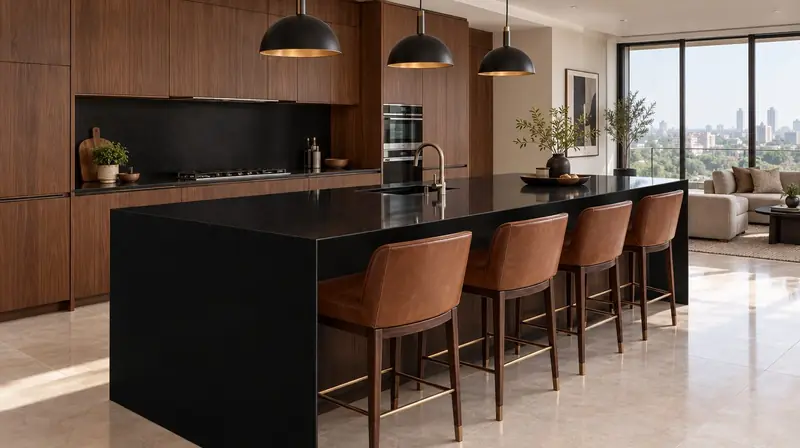
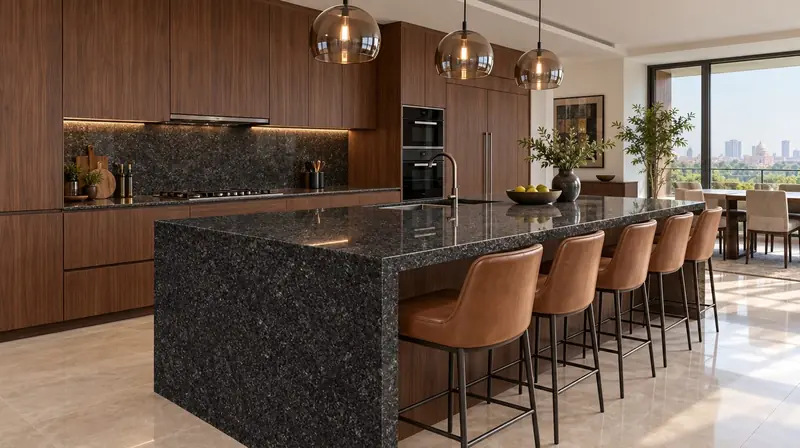
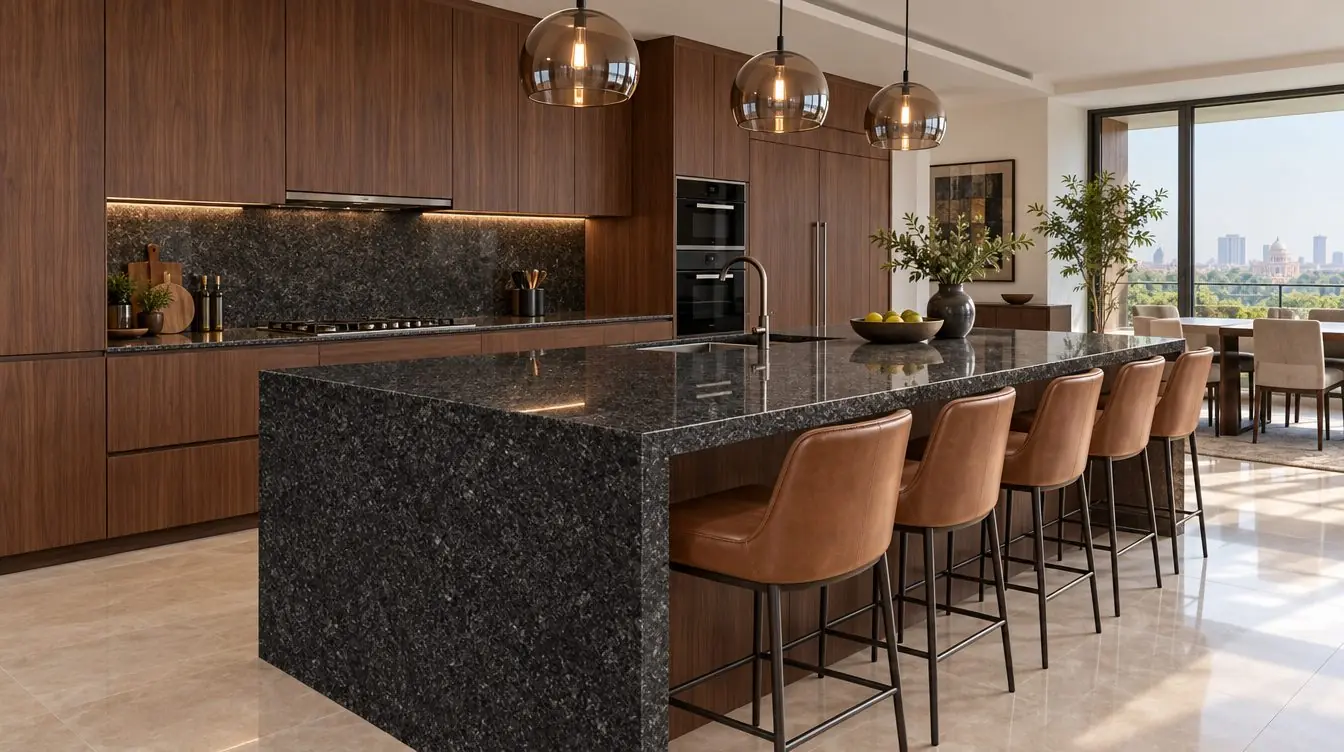
Prakasam district, around Ongole and Chimakurthy, is known for black and grey granites. In the Jaishree range, Black Galaxy, Steel Grey and Rosewood are listed with Ongole as their origin, while Telephone Black and Black Pearl are listed with Chimakurthy.
Black granites from this belt are valued for their depth and for the consistency of their colour. Jaishree once ran an export-oriented factory in Ongole, so this is a region the family business knows well. For more on this colour, see the black granite page and our Black Galaxy guide.
Greys such as Steel Grey are a quieter choice for people who find pure black too stark, and they tend to hide fingermarks and water spots better than a deep black does.
Telangana: Karimnagar and Khammam
Karimnagar is known for brown granites such as Tan Brown and Coffee Brown. Khammam gives lighter stones including Mariam White, Crystal Ivory and Alaska White.
The browns run from honey and gold to deep chocolate, which suits many Indian kitchens that favour warmth. The Khammam whites and ivories brighten a room but, being lighter, tend to show oil and turmeric more readily if not sealed, so a little extra care is worth it. Our white granite page gathers more of these.
Tamil Nadu: Salem
The Salem region yields greens and patterned granites such as Hasan Green, Juprana and Paradiso. These tend to be busier and more decorative than the plain blacks, and are often chosen where a feature is wanted, such as a bar top or a feature counter.
Greens in particular are a taste to acquire. Seen in a small sample they can look strong, but on a whole counter in a well-lit kitchen they can feel calmer, so view a full slab before deciding.
And in the north: Jalore
Rajasthan's Jalore produces pink, red and blue granites, from Rosy Pink to Sapphire Blue. These are less common in kitchens than blacks and browns, but they stand out in entrances, garden steps and bold interior features.
If a pink or blue appeals, look at it beside your cabinet colour and flooring before deciding, because these tones are strong and can dominate a small room.
Choosing by region
Knowing a granite's origin helps you understand its colour range and the consistency you can expect. A stone from a single belt generally behaves in a similar way from slab to slab, although variation within one stone is always normal.
If you are choosing a kitchen granite, our note on the best granite for kitchen countertops goes through the practical points. Every granite in the granite collection lists its origin where known, and the Indian granite page groups them. To see slabs in person, visit the experience centre.