What is travertine, and where does it work best?
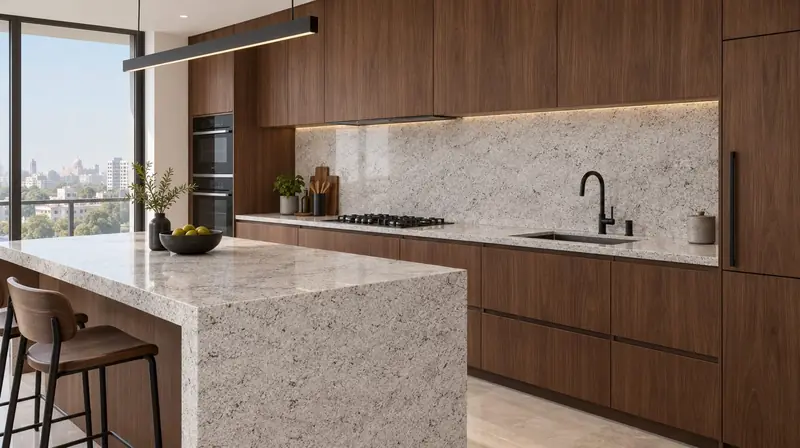
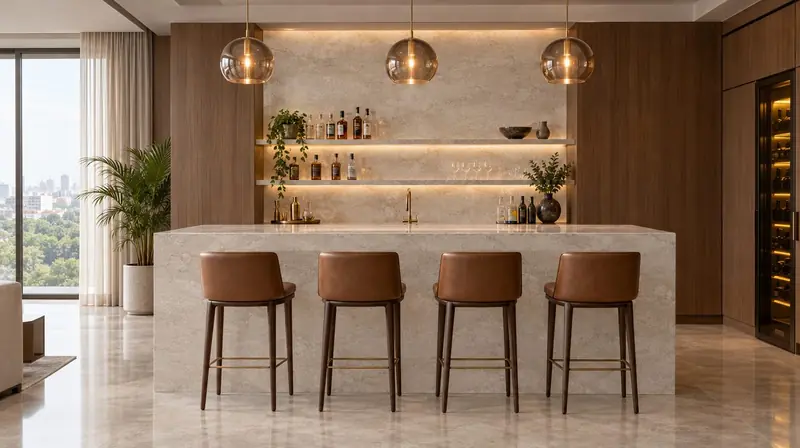
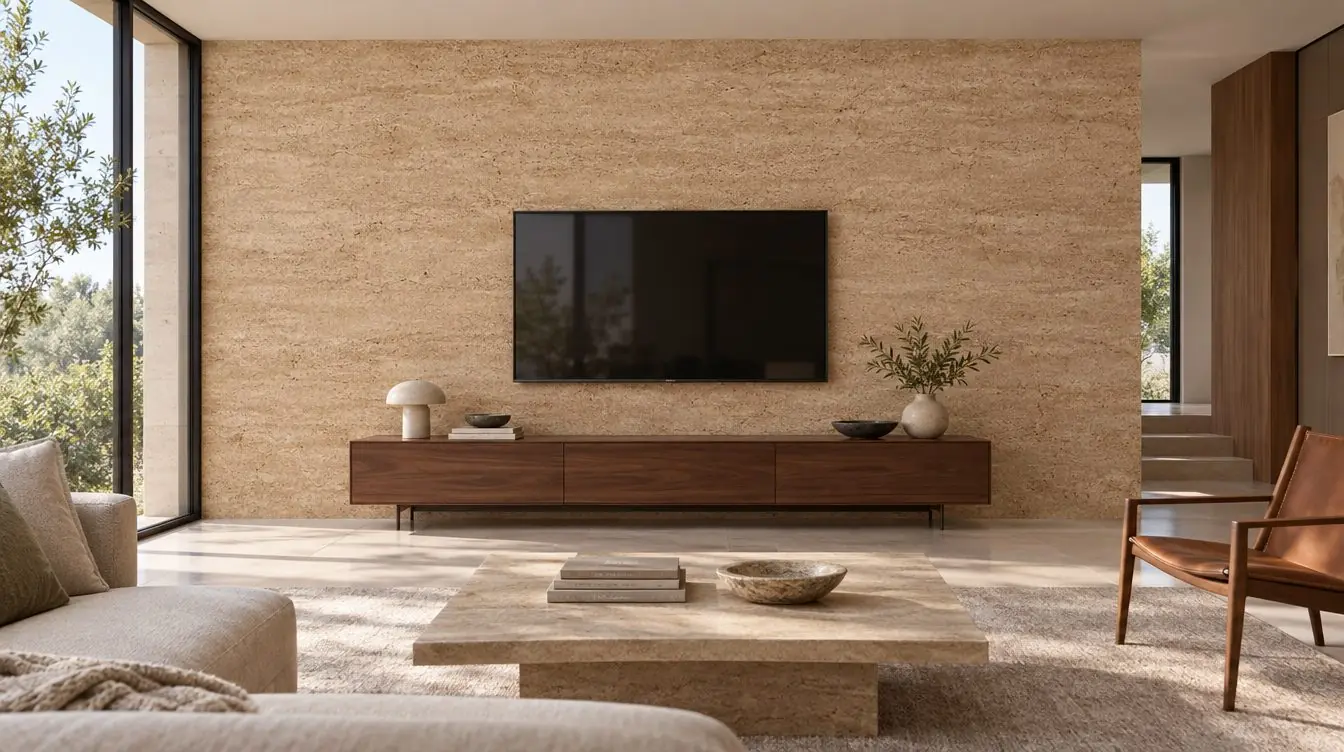
Travertine is a limestone formed by mineral springs, recognisable by its natural pores and warm cream, beige and silver tones. It works well on feature walls, in bathrooms, on living-area floors and around pools, in the right finish.
The pores come from the way it forms. As spring water evaporates and gases escape, small holes and channels are left in the stone, giving it a character that other marbles do not have.
Because it is a natural material, no two pieces match exactly. Bands of colour run along the length of a slab, and the size and spread of the pores differ from block to block. That variation is part of its appeal, and it is the reason to look at the actual slab rather than a catalogue image.
Filled or unfilled
Filled travertine has its pores filled with a matching cement or resin, giving a smooth surface that is easier to clean indoors. Unfilled travertine keeps its open texture, which suits a rustic look and outdoor use where grip matters.
Neither is a better product. Filled is practical for kitchens and bathrooms where dirt would otherwise settle in the holes, while unfilled has a more natural, weathered feel.
If you are unsure, ask your fabricator how a given slab has been filled and whether the filling can be redone later. Resin and cement fills behave differently over time, and some are more tolerant of heat and cleaning than others.
Finishes
Travertine can be polished, honed, brushed or tumbled. Honed and brushed finishes are the most popular because they emphasise the stone's soft character. Polished travertine is glossier and more formal, while tumbled stone has rounded edges and an old-world look.
Colour varies from stone to stone. Beige Travertine, listed with Tivoli, Italy as its origin, is a warm cream. Noche Travertine comes from Denizli in Turkey and runs deeper and darker. Titanium Travertine goes cooler and greyer. Together they show the range, and the wider travertine marble page gathers them.
Where it works
Travertine suits bathrooms, feature walls, living-area floors and sheltered outdoor spaces. A honed, filled travertine with a calm tone is a good bathroom wall or floor, while a brushed, unfilled piece suits a garden path or pool edge, where grip matters more than polish.
In very wet or very busy areas, think about grip and cleaning. A very polished surface can be slippery when wet, so your fabricator may recommend a honed or brushed surface for such spots.
Care
Being a form of limestone, travertine is sensitive to acids like marble. Use pH-neutral cleaners, and avoid acidic or harsh products. Seal it well, especially if unfilled, because open pores take in dirt and liquids more readily. Our guide on sealing marble and granite covers how often.
Filled pores can occasionally open over time, particularly with heavy cleaning. They are easily refilled by your stone contractor.
Seeing it in person
Photographs flatter travertine and also hide its texture, so look at real slabs where you can. The pores, colour bands and finish are the whole appeal, and they look different in daylight. Visit the experience centre at Sharda Puri, near Rajouri Garden, to see full slabs, or read our note on beige and cream marbles to compare it with its neighbours.