What is the difference between Statuario, Carrara and Calacatta?
Carrara has a soft white to grey ground with fine, feathery veins. Statuario has a brighter ground with bolder grey veins, and Calacatta has a very white ground with thick, often warm veins. Carrara is the most common and Calacatta the rarest.
All three come from the Apuan Alps above the town of Carrara in Tuscany. They share a history and geology, but the colour of the background and the character of the veining set them apart.
| Statuario | Carrara | Calacatta | |
|---|---|---|---|
| Background | Bright white | White to soft grey | Bright white |
| Veining | Bold grey | Fine, soft grey | Thick, dramatic, often grey with gold tones |
| Overall look | Striking and formal | Quiet and even | Bold and luxurious |
| Relative cost | High | Usually the most accessible of the three | High, varies with grade |
| Often used for | Feature walls, floors, bathrooms | Floors, bathrooms, large areas | Statement walls, islands, vanities |
Carrara
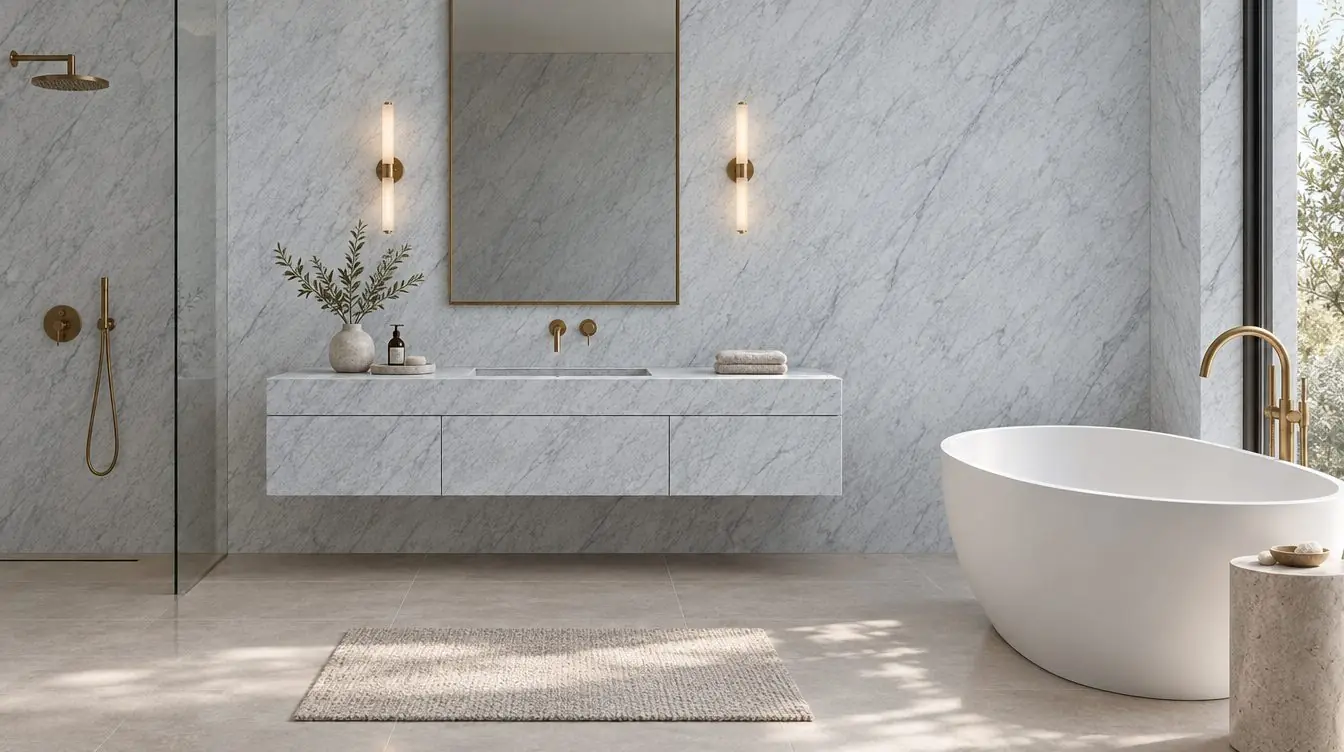
Carrara White has a soft white to light grey background with fine, feathery grey veining spread fairly evenly across the slab. It is the most widely available of the three, and its calm, consistent look makes it a natural choice for large floors and bathrooms.
Because the pattern is gentle, it hides small marks well and sits comfortably beside other materials. It is also the easiest of the three to match across several slabs, which helps on big areas.
Where the stone is laid also matters. In a bathroom or a passage, Carrara's gentle movement reads as a quiet backdrop, which is why designers reach for it when the aim is calm rather than display. In a room with strong artwork, it lets the artwork speak.
Statuario
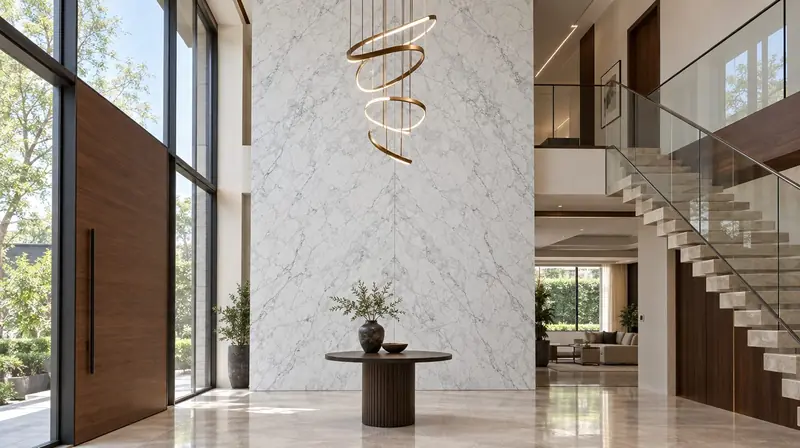
Statuario has a brighter, whiter background and bolder, darker grey veins that are more dramatic and less evenly spread. It is rarer than Carrara and is often used for feature walls, vanities and book-matched panels where the veining can be appreciated.
Book-matching mirrors consecutive slabs so the veins meet in a symmetrical pattern, which suits bold stones best. We explain the idea in our guide to book-matched marble.
Calacatta
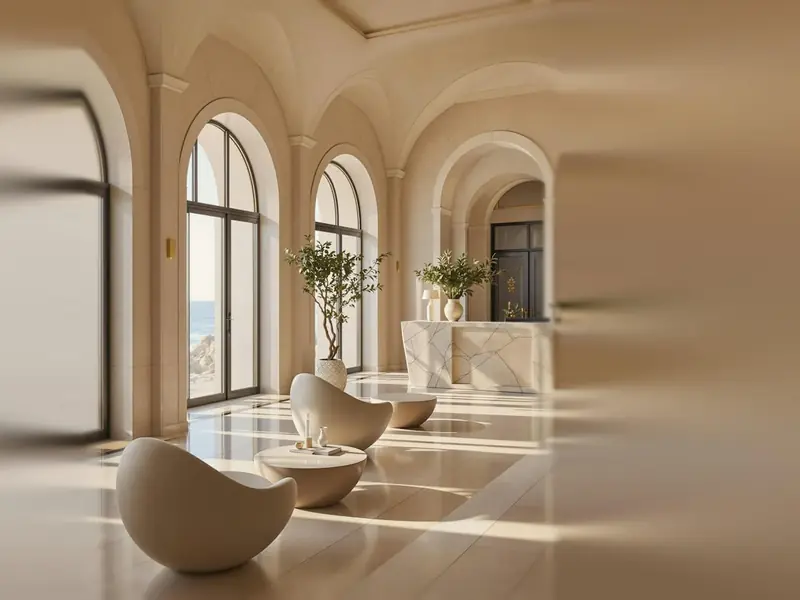
Calacatta-type marbles have a very white background with thick, striking veins, often with warmer gold or beige tones. They are among the rarest and most expensive white marbles and are chosen to make a statement, usually on a limited area such as a kitchen island, a wall or a small lobby.
The name is used loosely, and slabs sold under it vary a great deal. Treat the name as a starting point, not a promise of what you will see.
A neighbour worth knowing
Between these looks sits Venatino White, which is also listed with Carrara as its origin and has a white ground with grey veining. If you like the family but want to see more than three options, it is worth putting beside the others.
A quick way to judge
Look at the background first, then the veins. A soft grey ground with fine veins suggests Carrara. A bright white ground with bold grey veins suggests Statuario. A bright white ground with thick, warm veins suggests Calacatta.
Names are used loosely across the trade, and one quarry can produce slabs that look like all three. Always judge the actual slab, in daylight if you can, rather than a sample photograph.
Choosing between them
Use Carrara where you want calm and consistency, Statuario where you want drama, and Calacatta where the stone is the centrepiece. Compare them across the Italian marble and white marble pages, then see full slabs at the experience centre before you decide.
Light changes all three. Under warm bulbs a white marble looks creamier, and under cool daylight the grey in the veining becomes more obvious. Check your slab at the hour you will use the room most.